
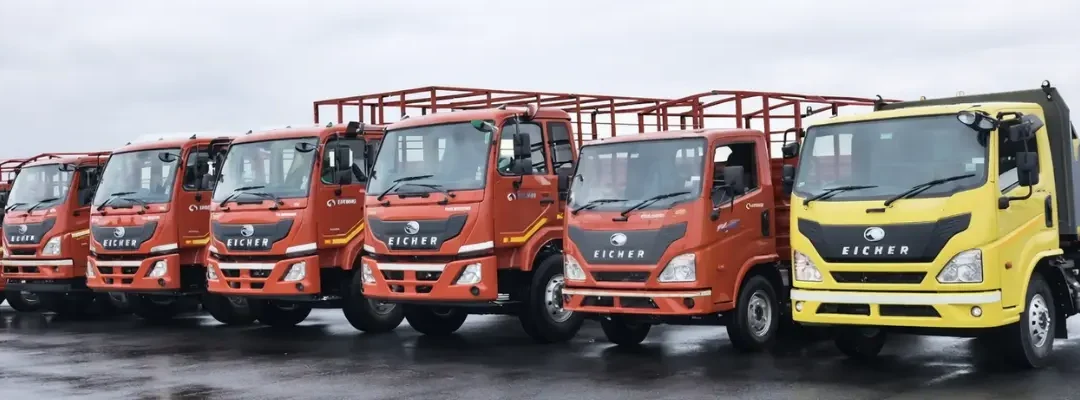
In LMD operations, profit is usually lost in small daily leaks—extra idling, late upshifts, harsh braking, overload, wrong route planning, and missed maintenance. A fuel-efficient truck helps, but real savings come when the vehicle, driver, and operating routine work together.
Eicher’s Light & Medium Duty (LMD) line includes the Pro 2000 series and Pro 3000 series in the 4.9 ton to 17.75 ton GVW range, designed for owner and driver needs across many applications.
What Are “LMD Trucks” (And Why They’re Used So Much in India)?
LMD = Light & Medium Duty trucks—typically used for:
- City and semi-urban deliveries
- Hub-to-hub distribution
- Market loads and general cargo
- Last-mile logistics and short-haul movement
This is exactly where fuel efficiency matters most because duty cycles have stop-go traffic, idling, frequent acceleration, and time pressure.
Where Fuel Cost Leaks Happen in Real Operations
Before we talk about features, check the common reasons mileage drops in LMD fleets:
- Long idling at loading/unloading points
- Wrong gear + RPM habits (late upshifts, over-revving)
- Overloading or poor load distribution
- Tyre pressure mismatch (even a few PSI low increases rolling resistance)
- Inconsistent maintenance (air filter, injectors, clutch, brakes)
- Route mistakes (wrong time window → traffic → stop-go fuel burn)
If you fix these basics, even a normal truck gives better numbers.
How Eicher LMD Trucks Help Improve Fuel Efficiency
1) Driver Guidance: Fuel Coaching + Driver Information Support
Eicher has long highlighted Fuel Coaching and driver information features in its LMD positioning (often bundled with driver-assist systems).
How it helps (practical):
- Guides the driver towards efficient gear/rpm use
- Reduces “High rpm driving” without productivity gain
- Improves consistency across different drivers
2) Cruise Control + Driving Modes (For Highway and Steady Runs)
On Eicher’s Pro 3000 platform (including Pro 3000 series chassis pages), Eicher lists advanced features like M-Booster+, Cruise Control, and Fuel Coaching on certain variants.
Where it saves fuel:
- Steady speed on open roads reduces unnecessary throttle variations
- Reduces driver fatigue (fatigue often leads to bad fuel habits)
Where it won’t help much:
- Heavy city congestion (cruise control usage is limited)
3) Connected Operations: Telematics (Eicher Live) + Fuel Management
Eicher has described Pro 3000 series offerings with smart services like Eicher Live, and also positions telematics/fuel-management programs as tools to reduce fuel spend.
What telematics helps you control:
- Idling hours per trip
- Overspeed events
- Harsh braking/acceleration patterns
- Route deviations and delay reasons
- Maintenance alerts (reduces breakdown-driven losses)
Eicher’s own blog claims telematics + fuel management can deliver up to ~10% lower fuel costs (results depend on operations and discipline).
4) Choosing the Right Powertrain: Diesel vs CNG vs Electric
Eicher’s LMD portfolio includes diesel, CNG, and electric options depending on application. Their LMD blog references Pro 2000/3000 and also points to options like Pro 2109 Turbo+ (CNG) and Pro 2055 EV.
Practical guidance:
- CNG: strong for predictable urban routes where CNG availability is good (lower running cost per km often becomes the main advantage).
- Electric: best for fixed last-mile routes with planned charging and daily km discipline (fuel cost becomes much lower, but planning is everything).
- Diesel: still common for mixed routes, longer daily km, and where refueling flexibility is required.
Reducing Operating Cost Beyond Fuel
Fuel is only one part of operational cost. Eicher’s LMD blog also ties efficiency to lower maintenance and higher uptime—because a stable, well-managed powertrain reduces breakdown frequency and unplanned expenses.
Real-world cost reducers:
- Preventive service on schedule (filters, oils, def where applicable)
- Tyre rotation + alignment discipline
- Avoiding overload (saves fuel and saves tyres/suspension)
- Tracking small issues early (coolant leaks, clutch slip, abnormal smoke)
10-Point “Fuel + Cost Control” SOP
Use this weekly SOP to get results—regardless of truck brand:
- Set an idling rule (example: no idling > 5 minutes)
- Maintain tyre pressure checks twice a week
- Fix payload discipline (no “extra bags” beyond plan)
- Keep one driver scorecard: overspeed + idling + harsh brake events
- Train drivers on efficient RPM band + early upshifts
- Plan dispatch to avoid peak congestion windows
- Track mileage per route (not one overall average)
- Service on schedule—no skipping air/fuel filters
- Confirm loading/unloading time slots to reduce detention
- Review top 3 delay reasons weekly and eliminate repeats
Which Eicher LMD Truck Fits Which Use Case?
Sub-5 ton and last-mile logistics
For last-mile and intra-city loads, models like Pro 2049 are positioned around fuel economy, comfort, and urban logistics use cases.
6–12 ton distribution and hub runs
Choose based on:
- Body length requirement
- Loading method (manual vs forklift)
- Route type (city vs mixed)
12–17.75 ton medium duty
Best when:
- You have regular hub-to-hub cargo
- You want fewer trips with better unit economics
- Loading/unloading is organized (to avoid detention losses)
FAQs
1) What does LMD mean in trucks?
LMD means Light & Medium Duty—in Eicher’s case, the lineup includes Pro 2000 and Pro 3000 series covering 4.9–17.75 ton GVW.
2) Do features like fuel coaching and cruise control really improve mileage?
They help most when combined with driver discipline and route planning. Eicher lists fuel coaching/cruise control on specific Pro-series variants.
3) Can telematics reduce operating costs?
Telematics helps reduce idling, overspeed, harsh driving, and can trigger early maintenance action. Eicher positions telematics/fuel-management as a cost saver (often used for better fuel control).
Recent Comments