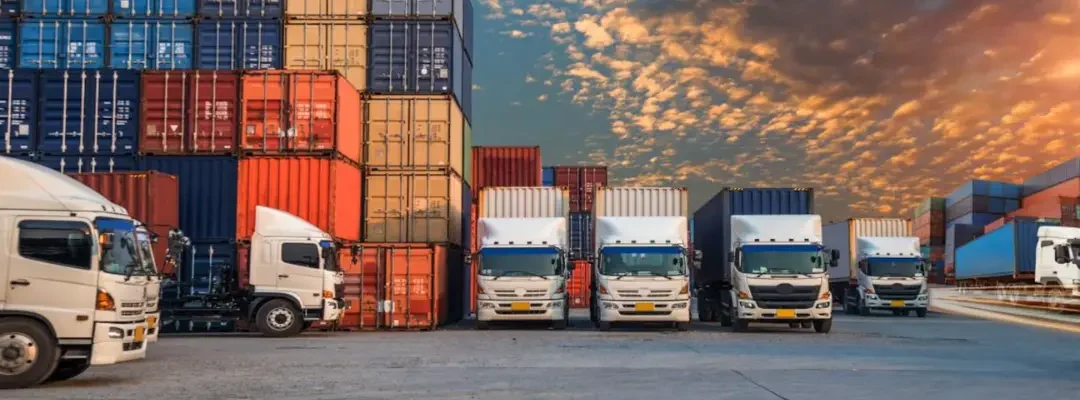
India’s National Logistics Policy (NLP) is a national plan to make goods movement more efficient, more predictable, and more cost-effective. It focuses on fixing day-to-day issues like process delays, lack of visibility, service inconsistencies, and slow problem resolution—while supporting long-term improvements through better coordination and digital integration. The policy was launched on 17 September 2022.
What is the National Logistics Policy?
The National Logistics Policy is a framework to build a technology-enabled, integrated, cost-efficient, resilient, sustainable, and trusted logistics ecosystem in India.
How NLP is different from PM GatiShakti
- PM GatiShakti focuses on integrated infrastructure planning and multimodal connectivity.
- NLP focuses on improving logistics services, standards, digitisation, skilling, and coordination so transport and supply chains run smoother on the ground.
Why the National Logistics Policy matters for businesses
In real operations, logistics cost and delay usually come from:
- unclear pickup and unloading coordination
- waiting time (detention) at factories/warehouses
- repeated follow-ups due to poor shipment visibility
- inconsistent processes across locations and departments
- service issues that repeat without a structured resolution path
NLP targets these friction points through a structured action plan and digital enablement.
NLP objectives and targets
As per the government’s stated targets, NLP aims to:
- Reduce logistics cost in India
- Improve India’s Logistics Performance Index (LPI) ranking (endeavor: top 25 by 2030)
- Create a data-driven decision support mechanism for an efficient logistics ecosystem
How NLP is implemented: CLAP (Comprehensive Logistics Action Plan)
NLP is executed through the Comprehensive Logistics Action Plan (CLAP), which is organised into 8 action areas.
The 8 CLAP action areas
- Integrated Digital Logistics Systems
- Standardisation of Physical Assets & Service Quality Benchmarking
- Logistics Human Resource Development & Capacity Building
- State Engagement
- EXIM Logistics
- Services Improvement Framework
- Sectoral Plans for Efficient Logistics (SPEL)
- Facilitation of Logistics Parks Development
What this means: NLP is not one single scheme—it is a structured program covering digital systems + service standards + skilling + state reforms + sector improvements.
NLP’s digital backbone (what affects day-to-day logistics)
ULIP (Unified Logistics Interface Platform)
ULIP is a platform designed to provide secure access to logistics-related information by integrating multiple government systems via APIs. Early rollout updates noted 30 systems from seven ministries integrated through 100+ APIs (covering 1600+ data fields).
Recent updates show ULIP has scaled significantly (for example, it crossed 100 crore API transactions and later reported very large overall transaction volumes).
Practical impact for businesses
- better shipment visibility (less “where is the truck?” chasing)
- fewer manual follow-ups when systems are integrated
- smoother planning for larger shippers/platform-linked movements
e-LogS + SIG (Services Improvement Group)
NLP includes a Services Improvement Group (SIG) and the e-LogS mechanism to help address logistics service issues in a structured way (via industry associations and coordinated review).
Practical impact
- recurring service problems can be logged and tracked
- faster resolution compared to unstructured escalation loops
LEADS (Logistics Ease Across Different States)
LEADS benchmarks logistics performance across States/UTs. LEADS 2024 evaluates performance using four pillars:
- Logistics Infrastructure
- Logistics Services
- Operating & Regulatory Environment
- Sustainable Logistics (newly introduced)
LEADS 2025 continues the benchmarking approach across States/UTs.
Practical impact
- states are pushed to improve logistics environment and service conditions
- businesses get clearer signals on which regions are improving logistics readiness
What SMEs and transport operations should expect
For material holders / shippers
- stronger need for clean documentation and accurate dispatch details
- better predictability as visibility systems and standard processes mature
- fewer avoidable delays when coordination improves
For transporters / fleet operators
- higher importance of compliance, time discipline, and service quality
- increased demand for transparency (updates, proofs, clear assumptions)
For warehouses / distribution teams
- greater focus on slot-based unloading and reduced detention
- more structured coordination as logistics planning improves over time
FAQs
When was the National Logistics Policy launched?
NLP was launched on 17 September 2022.
What is CLAP in the National Logistics Policy?
CLAP is the Comprehensive Logistics Action Plan with 8 action areas covering digital systems, service standards, skilling, state engagement, EXIM logistics, sectoral plans, and logistics parks.
What is ULIP in logistics?
ULIP is an API-based platform that integrates logistics-related systems to enable secure access to data and improve visibility and planning.
What is e-LogS?
e-LogS is a mechanism used with SIG to raise and track logistics service issues through a structured review process.
What is LEADS?
LEADS benchmarks logistics performance across States/UTs; LEADS 2024 uses four pillars including Sustainable Logistics.
Recent Comments