
Online Long Distance Truck Booking
Booking a truck for long-distance transport shouldn’t mean chasing brokers, guessing prices, or worrying about where your vehicle is. This guide explains online long distance truck booking step-by-step—how quotes are calculated, when to choose FTL vs PTL vs LTL, which truck type fits your cargo, what documents you need for interstate truck booking, and how to reduce delays and damage.
Pricing: what affects long-distance truck rates
Distance + route (tolls, terrain, diversions)
Truck type & capacity (open vs container, axle class)
Weight/volume + cargo category (fragile, high-value, handling constraints)
Pickup/delivery complexity (narrow access, waiting time, night restrictions)
Seasonality + backhaul availability
Add-ons (labor, packing, multi-stop, detention/waiting, goods in transit insurance)
How to get a more accurate quote online
Share these upfront:
- Exact pickup/drop pin codes (not just city)
- Approx weight + dimensions (or boxes/pallet count)
- Cargo type + approximate value (helps recommend insurance)
- Loading/unloading needs (ground/floor, lift availability, helpers required)
How online truck booking works
01
Enter pickup & drop details
Add pin codes and choose location type (warehouse / market / home / factory)
02
Add cargo details
Mention commodity, weight/volume, packing type, and if loading help is needed
03
Choose freight type + truck
Select FTL / PTL / LTL and your preferred truck body (open / container / etc.)
04
Get a transparent quote
Quote typically includes base freight + route/tolls + add-ons (labor, waiting, multi-stop, etc.)
05
Confirm & schedule pickup
Pick a pickup date + time window
06
Vehicle assigned + driver details shared
Vehicle number + driver contact shared; tracking starts once the trip begins
FTL vs PTL vs LTL: what should you book?
FTL (Full Truck Load)
Choose FTL when you need a dedicated vehicle, faster point-to-point movement, fewer handling touches, or you’re shipping heavy/high-value cargo. You book the entire truck for your shipment.
PTL (Part Truck Load)
Choose PTL when your shipment is mid-sized and doesn’t require a full truck. It’s typically consolidated with other freight, which can reduce cost but may add handling steps and transit buffers.
LTL (Less-Than-Truckload)
Choose LTL for smaller freight where you pay for the space/weight you use. It’s cost-efficient but can involve more transfers and extra time windows.
Fast decision rule
- Need fast delivery + minimal handling → FTL
- Need best price for small loads → LTL
- Need balanced cost for medium shipments → PTL
Mini comparison
- Speed: FTL (fastest) → PTL → LTL
- Handling: FTL (lowest) → PTL → LTL
- Cost per shipment: LTL (lowest for small) / PTL (mid) / FTL (best for large or urgent)
Truck types for long distance
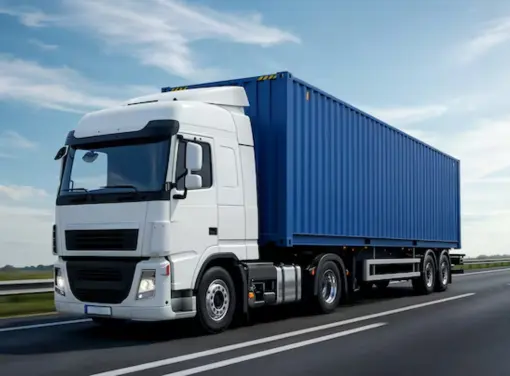
Choosing the right vehicle avoids under/over-paying and reduces damage risk. Common options for long routes include 14–19 ft trucks and closed container trucks (19/20/22/24/32 ft) based on cargo and route.
Quick truck selection guide
- Small commercial freight / light loads → 14–17 ft
- General cargo, cartons, light machinery → 17–19 ft
- Rain/dust-sensitive goods → Closed container (19–32 ft)
- Oversized / heavy industrial cargo → Open body / trailer (route + permits dependent)
Documents checklist
If you’re moving goods long distance—especially interstate—paperwork matters. Under GST provisions, e-way bill requirements generally apply when the consignment value exceeds ₹50,000 (with specific rules/exceptions depending on movement type and goods).
Common documents (business freight)
- Tax invoice / Delivery challan
- E-way bill (when applicable)
- Transport document / LR (Lorry Receipt) issued by transporter
- Receiver details (GSTIN/address as required)
- Insurance (optional, recommended for higher-value cargo)
For household shifting (personal goods)
Requirements vary by route and carrier policy. Keep:
- Item list / declaration
- ID proof
- Destination contact details
- Consider goods-in-transit insurance for high-value items
Tracking, safety, and proof of delivery
Tracking & trip updates
- GPS-based visibility (start, checkpoints, ETA refresh)
- Exception alerts (breakdown, route deviation, delays)
Safety checks you should expect
- Vehicle verification (basic documents + fitness signals)
- Driver details shared before dispatch
Delivery confirmation (POD)
- Digital or signed Proof of Delivery with date/time + receiver name
- Optional photos for high-value B2B deliveries
Common use cases we support
Manufacturer → distributor / warehouse transfers (plant dispatch, stock movement, depot replenishment)
E-commerce bulk movement & replenishment (hub-to-hub, FC restocking, seller pickups)
Industrial machinery & spares (crated machines, motors, panels, toolkits, service parts)
FMCG cartons & packaging material (boxes, pouches, bottles, labels, corrugated rolls)
Intercity household moves (1BHK–villa shifting, fragile handling, doorstep loading/unloading)
Why choose us - Online Long Distance Truck Booking
Faster booking, fewer calls
Book truck online with clear steps and quick confirmations.
Transparent pricing
Quote breakup with route factors, toll impact, and add-ons shown upfront.
Interstate-ready guidance
Support for documents like e-way bill (when applicable), LR and dispatch checklist.
Tracking & trip updates
Driver/vehicle details shared and trip visibility once movement starts.
Safer handling process
Packing/stacking instructions captured to reduce breakage and claims.
Reliable delivery proof
POD/acknowledgement with receiver name and time for closures.
FAQs – Long Distance Truck Booking
1. How do I book a long-distance truck online?
Enter pickup/drop pin codes, add cargo details (type + weight/volume), choose FTL/PTL/LTL and truck type, then confirm the quote and pickup slot.
2. Which is cheaper: FTL or LTL for long distance?
For small loads, LTL is usually cheaper because you pay only for space/weight used. For large loads, FTL can be better value per kg and often faster.
3. What is PTL in truck transport?
PTL (Part Truck Load) is for medium shipments that don’t need a full truck. Your load shares vehicle space with other freight, helping reduce cost.
4. FTL vs PTL vs LTL—what should I choose?
Choose FTL for fastest delivery + minimal handling, LTL for small shipments + lowest cost, and PTL for medium loads + balanced pricing.
5. What truck size is best for long-distance transport?
It depends on cargo volume/weight and protection needs. Many shipments use 14–19 ft trucks, while weather-sensitive goods often use 19–32 ft container trucks.
6. Is a container truck better than open body for long distance?
Yes for cartons, electronics, textiles, and moisture/dust-sensitive goods—container trucks reduce weather and contamination risk.
7. How are long-distance truck transport rates calculated?
Rates depend on distance/route, truck type, weight/volume, pickup/delivery complexity, season demand, and add-ons (labor, waiting, multi-stop, insurance).
8. What details should I share to get an accurate online quote?
Exact pickup/drop pin codes, cargo type, approximate weight/volume, packing type, loading/unloading needs, and whether you need a container/open body.
9. Is an e-way bill required for interstate truck booking?
Often required for taxable goods movement depending on consignment value and rules. Share invoice/challan details so we can guide if e-way bill applies.
10. What documents are needed for interstate goods transport?
Typically invoice or delivery challan, e-way bill (when applicable), and transporter LR/consignment note. Requirements can vary by shipment type.