
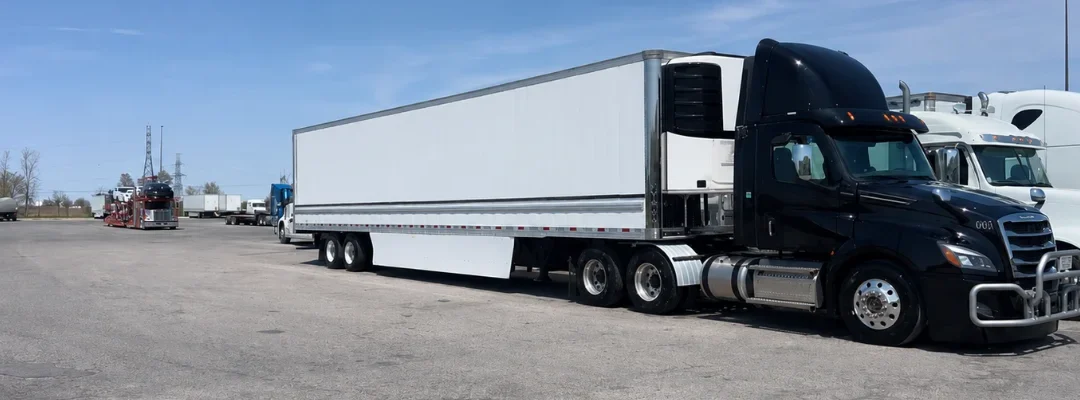
Choosing the right road transport option helps businesses control logistics cost, delivery time, and cargo safety. Two common options in road transportation are FTL and LTL.
FTL means Full Truck Load, where one customer books the complete truck. LTL means Less Than Truck Load, where the customer uses only part of the truck space for smaller cargo movement.
Both are useful, but the right choice depends on cargo volume, delivery urgency, budget, route, and handling requirement.
What is FTL Transportation?
FTL transportation means booking a full truck for one customer’s cargo. The vehicle is dedicated to one shipment and usually moves directly from pickup location to delivery location.
FTL is suitable for large cargo volume, bulk shipments, factory dispatches, warehouse transfers, port movement, and long-distance transportation.
For example, if a manufacturer needs to move a full truck of finished goods from Chennai to Mumbai, FTL is usually the better option.
What is LTL Transportation?
LTL transportation means moving cargo that does not require a full truck. In LTL movement, cargo from multiple customers may be combined in one vehicle based on route and destination.
LTL is suitable for small shipments, part-load cargo, distributor supply, warehouse deliveries, retail movement, and cost-effective cargo transportation.
For example, if a business needs to move 15 or 20 cartons from Bengaluru to Hyderabad, LTL may be more economical than booking a full truck.
FTL vs LTL: Key Differences
| Factor | FTL Transportation | LTL Transportation |
|---|---|---|
| Truck usage | Full truck for one customer | Part truck space |
| Best for | Large cargo volume | Small and medium cargo |
| Cost | Better when truck is fully used | Better for smaller cargo |
| Delivery speed | Usually faster | May take longer |
| Cargo handling | Less handling | More handling possible |
| Cargo mixing | No mixing | May be consolidated |
| Control | Higher control | Lower control |
| Common use | Bulk, urgent, direct cargo | Part-load and distribution cargo |
When Should You Choose FTL?
Choose FTL transportation when:
- Cargo volume is high
- You need a dedicated truck
- Delivery is urgent
- Cargo should not be mixed
- Direct delivery is required
- Cargo is high-value or sensitive
- You need factory-to-port or port-to-factory movement
- You are moving cargo over long distances
FTL gives better control over the shipment because the vehicle is used only for one customer’s cargo.
When Should You Choose LTL?
Choose LTL transportation when:
- Cargo quantity is small
- You do not need a full truck
- You want to reduce transport cost
- Delivery timeline is flexible
- Cargo can be consolidated
- You have regular small dispatches
- You supply distributors, retailers, or branches
LTL is a practical option for businesses that need cost-effective road transport for smaller shipments.
Cost Difference Between FTL and LTL
FTL may look more expensive because the customer pays for the complete truck. But if the cargo fills most of the vehicle, FTL can be cost-effective.
LTL is usually cheaper for smaller shipments because the customer pays only for part-load movement.
Simple rule:
| Situation | Better Option |
|---|---|
| Full truck cargo | FTL |
| Small cargo | LTL |
| Urgent cargo | FTL |
| Cost-sensitive small shipment | LTL |
| Direct delivery needed | FTL |
| Flexible timeline | LTL |
Which Option is Better for Your Business?
There is no single answer. The best option depends on your shipment requirement.
Choose FTL if your cargo is large, urgent, sensitive, or needs direct delivery.
Choose LTL if your cargo is smaller, cost-sensitive, and can move with other compatible shipments.
Businesses should compare not only the freight cost, but also delivery time, cargo handling, safety, and reliability.
Common Mistakes to Avoid
Avoid these mistakes while choosing FTL or LTL:
- Booking a full truck for very small cargo
- Choosing LTL for urgent cargo without checking transit time
- Not confirming cargo weight and volume
- Selecting the wrong vehicle type
- Ignoring loading and unloading requirements
- Not planning for POD collection
- Choosing only based on lowest price
The right transport option should balance cost, speed, safety, and delivery requirement.
How Skyroots Logistics Can Help
Skyroots Logistics supports businesses with road transport solutions across India, including FTL transportation, LTL transportation, express trucking, local transportation, long-haul transportation, and truck rental services.
Our team helps customers choose the right option based on cargo size, route, delivery timeline, vehicle requirement, and budget.
FAQs
What is FTL transportation?
FTL means Full Truck Load transportation, where one complete truck is used for one customer’s cargo.
What is LTL transportation?
LTL means Less Than Truck Load transportation, where cargo uses part of a truck space.
Which is cheaper, FTL or LTL?
LTL is usually cheaper for smaller shipments. FTL can be cost-effective when cargo volume is large.
Which is faster, FTL or LTL?
FTL is usually faster because the truck moves directly from pickup to delivery location.
Which is better for bulk cargo?
FTL is usually better for bulk cargo.
Which is better for small shipments?
LTL is usually better for small shipments.
Recent Comments